


When 3D printing was first invented in 1984 by Chuck Hull’s breakthrough with SLA, no one imagined it would grow into the massive industry it is today. It’s next to impossible to check out a holiday gift guide or walk into a school without seeing something related to 3D printers for beginners floating around.
The good news is that the makerspace is as diverse as people visiting a new restaurant for a quick bite. Those wishing to get into a new hobby or try customizing items at home often find themselves at a crossroads. They feel overwhelmed choosing between a laser engraver and a 3D printer. On one side, you can customize and get fast results with a laser engraving machine. On the other hand, you can create from scratch using 3D printer filament in new and innovative ways.
While both devices offer a broad range of possibilities and have a strong enough following to provide plenty of support, they are designed for very different types of creators. Neither is “universally better” than the other. The right choice depends on what it is you want to make and your comfort level with new technology. Here is a quick guide to help you figure out what DIY projects and platforms will best suit your unique interests.
Laser Engravers vs. 3D Printers: How to Choose for Beginners?
The good news is that a laser engraving machine or a 3D printer both support your creativity. Whichever way you lean, you will have a device that helps you take an idea in your head and turn it into a physical product. Congratulations! You are among the rare type of human being who likes to be creative.

Choosing which device to use comes down to comfort, budget, and ease of access. You shouldn’t feel so overwhelmed when you get started that it freezes you from moving forward. It helps to get the basics of how each machine works so you can better understand the method of visual design, personalization, and results. A laser engraver is often better for those who like to customize existing objects and materials, while a 3D printer might be better for those who love problem-solving and building new creations one layer at a time.
The difference is more than price, popularity, or features. It’s what you can imagine yourself doing in your free time. If you love customizing gifts and turning simple materials into memorable items, then go with laser engraving. If you like creating something that didn’t exist before, then try a 3D printer. That difference is what matters.
Laser Engraving vs. 3D Printing: Essential Differences
Still on the fence about what device to choose? That’s okay! You’re not alone. You don’t want to invest a lot of time and money in something that doesn’t scratch your particular creativity itch. Here are some basics on the differences in the devices to give you a better idea of what to expect.
Fundamental Differences in Creation Methods
The primary difference you’ll see with any craft ideas is how the items are created. The “how” answers many early beginner questions. A laser engraving machine works by focusing a beam of light through lenses, generating heat on the surface of materials such as wood, leather, and acrylic. That heat etches, engraves, burns, and cuts based on the speed, power, and angle.
Laser engraving lets you personalize a leather keyring or add a fun logo to the back of a wood cutting board. You take something that already exists and use the machine to make it more personal and memorable. The whole process is fast, but does require some learning related to proper setup, material selection, and operating guidelines.
3D printing is different. It doesn’t use light energy to modify a pre-existing item. The machine builds something new by using layer upon layer of 3D printer filament, which is usually a plastic material. Each new layer is heated so it can be molded into the design you create in specific software, and it can take a long time to finish, depending on the design's complexity.
The additive process in 3D printing is powerful, but it does require much closer attention. One mistake can mean having to reset the device, try to connect cut pieces of filament, or search for solutions in the online forums for the 3D printer makerspace.
Which Is Better for You?
Alright, now for the $99 million question: which is better for you? It helps categorize the type of work by the process used. If you prefer to customize different materials with unique decorations, personalization, and get a quick result you can physically touch in no time, then you should try laser engraving.
If you prefer to operate in the structural design world using three-dimensional models to solve problems like a new part for a clock or a fun feature that makes a long drive more comfortable, then try 3D printing.
That simple difference is enough to determine what type of beginner hobbyist you wish to be. In some rare cases, you might be a “hybrid creator” who uses both a laser engraver and a 3D printer to design incredible products. Either way, take your time. As a beginner, you have a whole new world to learn and need to feel comfortable and approachable so you fall in love with the hobby.
Start With the Work: What You Want to “Make” Determines What You Want to “Buy”
It may seem simple, but adopt a philosophy of “start with the work.” The things you wish to create will help you determine whether to buy a new laser engraving machine or seek out the best 3D printers for beginners to make your craft ideas a reality.
Materials and Finished Product Orientation
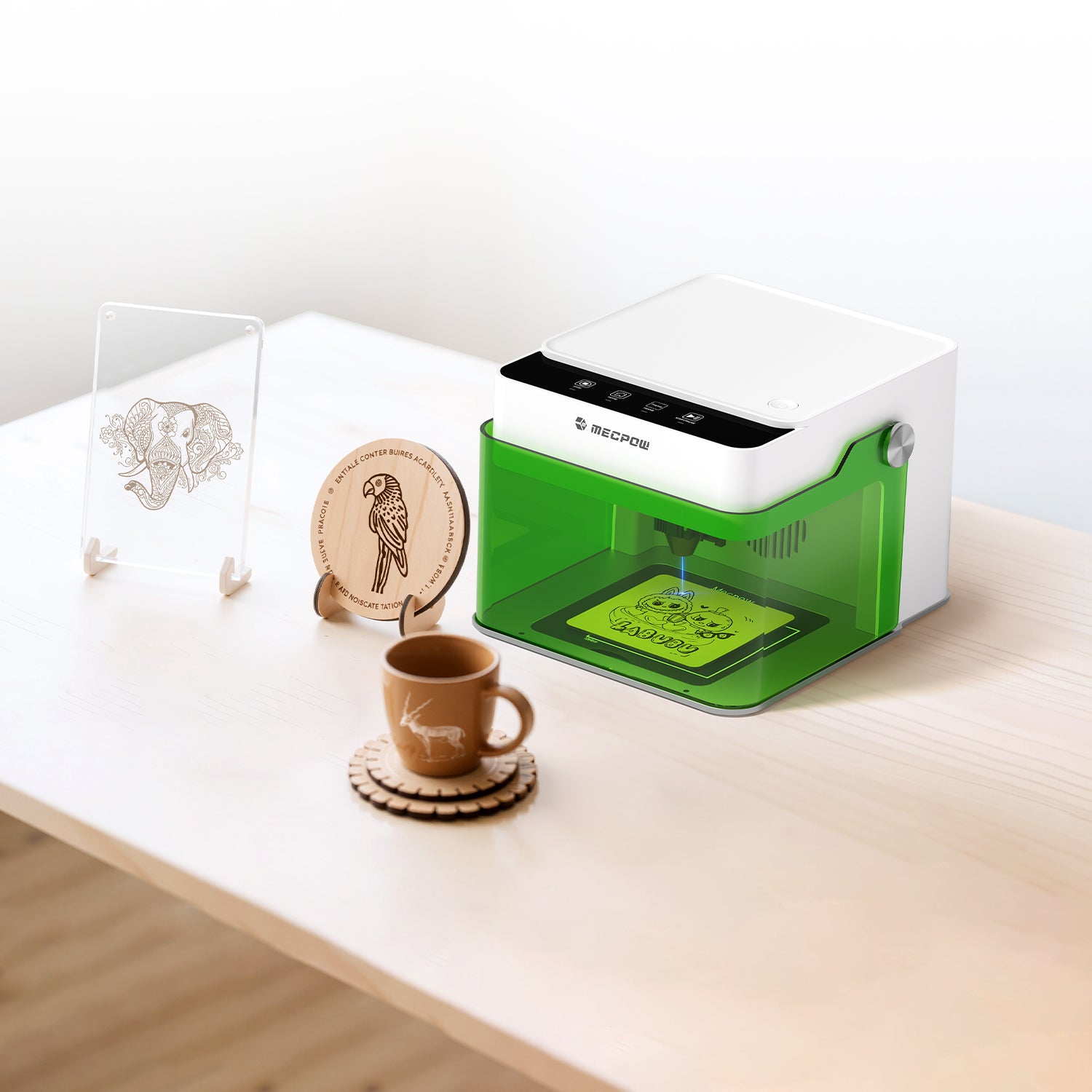
A good starting point for the “work” you should have in mind is the materials. With laser engraving, you’re not creating from scratch. For example, a Mecpow laser engraver works with over 300 different materials, from organic options like bamboo wood to light-capturing materials like acrylic.

The finished product of a laser engraver is fast to see. It only takes a few minutes of prep work, importing designs, and then setting the machine to start before you see a result. People who enjoy laser engraving tend to appreciate the physical touch of different materials before and after a DIY project.
3D printers require custom 3D printer filament, which serves as a raw material. You don’t see the physical object until it is created. That can lead to a lot of trial and error as a digital design is turned into a physical product. However, that process is fascinating to those who love 3D printing and is used as momentum to try new designs and projects.
Difficulty of Getting Started and Cost of Learning
Getting started and tackling the learning curve are other factors. Laser engraving tends to be slightly more approachable for beginner hobbyists. While there are some technical aspects you’ll need to learn, the software is intuitive and devices come with clear instructions. You’re working in two dimensions, which feels far more realistic if you don’t have complex design skills.
With 3D printing, the possibilities are endless, but you have a much sharper learning curve. The technology is still relatively new, meaning some problem-solving is required to figure out how to use slicing software, understand how layers behave during printing, and troubleshoot warping or poor adhesion. In the makerspace, more engineers and mechanics prefer 3D printing for its problem-solving capabilities.
Cost and Maintenance Differences
The almighty dollar also plays an essential role in deciding between 3D printing and laser engraving machines. Most devices from both creative files are around the same price upfront. It’s the ongoing costs that really make a difference.
With laser engraving, the costs depend on the materials you choose. A large purchase of leather blanks or basswood might be more expensive. However, there aren’t any real maintenance expenses, other than adding new accessories to create more diverse designs.
With 3D printing, your primary expenses will be 3D printer filament and device maintenance. You might have to purchase a new nozzle or take the device into a nearby shop for periodic calibration. Plus, if the print fails, you’re out the cost of filament, which can add up over time. That can be expensive for newbies testing out both systems.
Recommended Scenarios: Tool Selection by Project
Need a little more help to decide where to begin? Consider the types of projects you’ll take on with both a 3D printer and a laser engraving machine.
Customized Gifts and Decorations
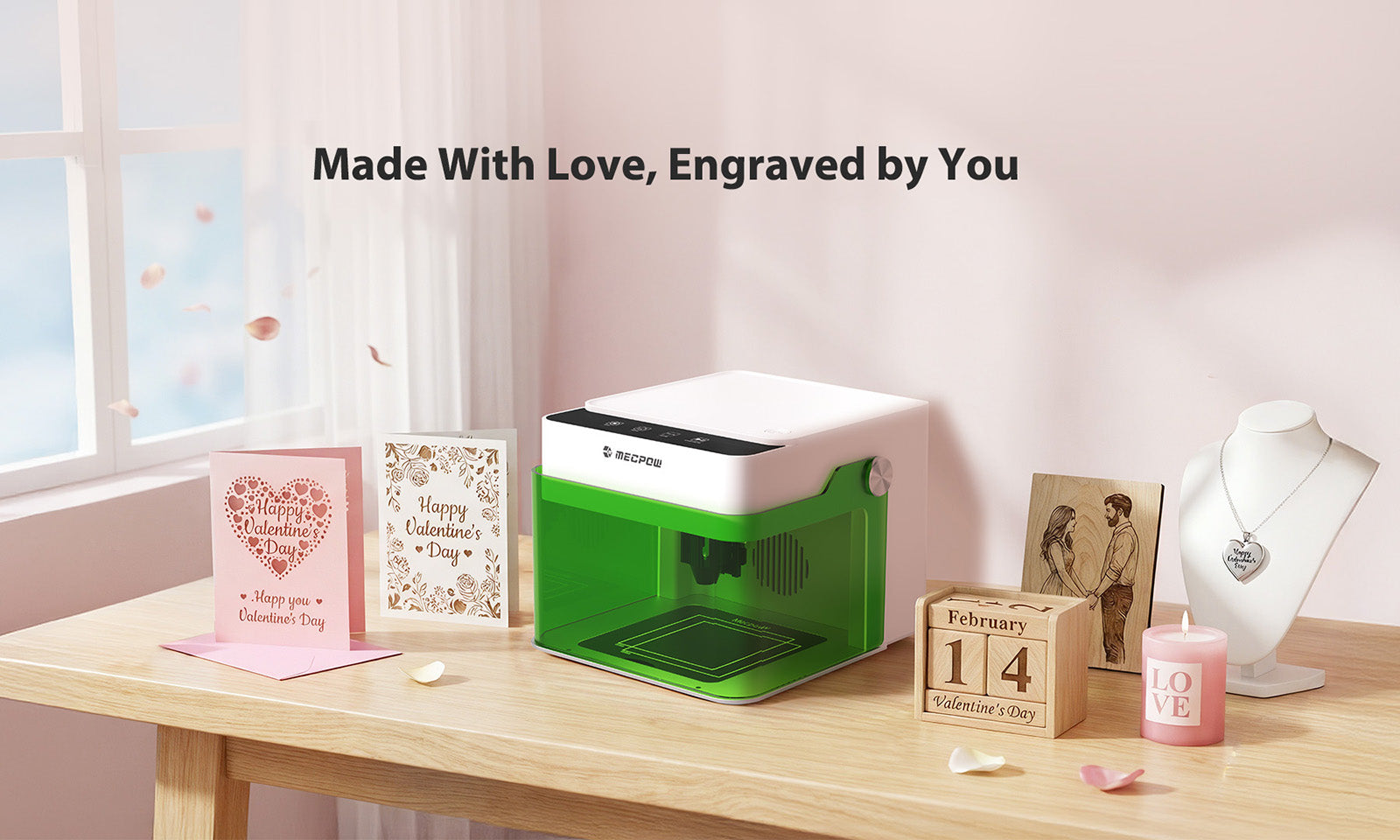
A Mecpow laser engraver is a fantastic device for fast, good textures when personalizing different items with names, dates, quotes, and designs. The finished product looks polished and intentional, providing you with an excellent new item you can then gift, keep, or use to build a side hustle.
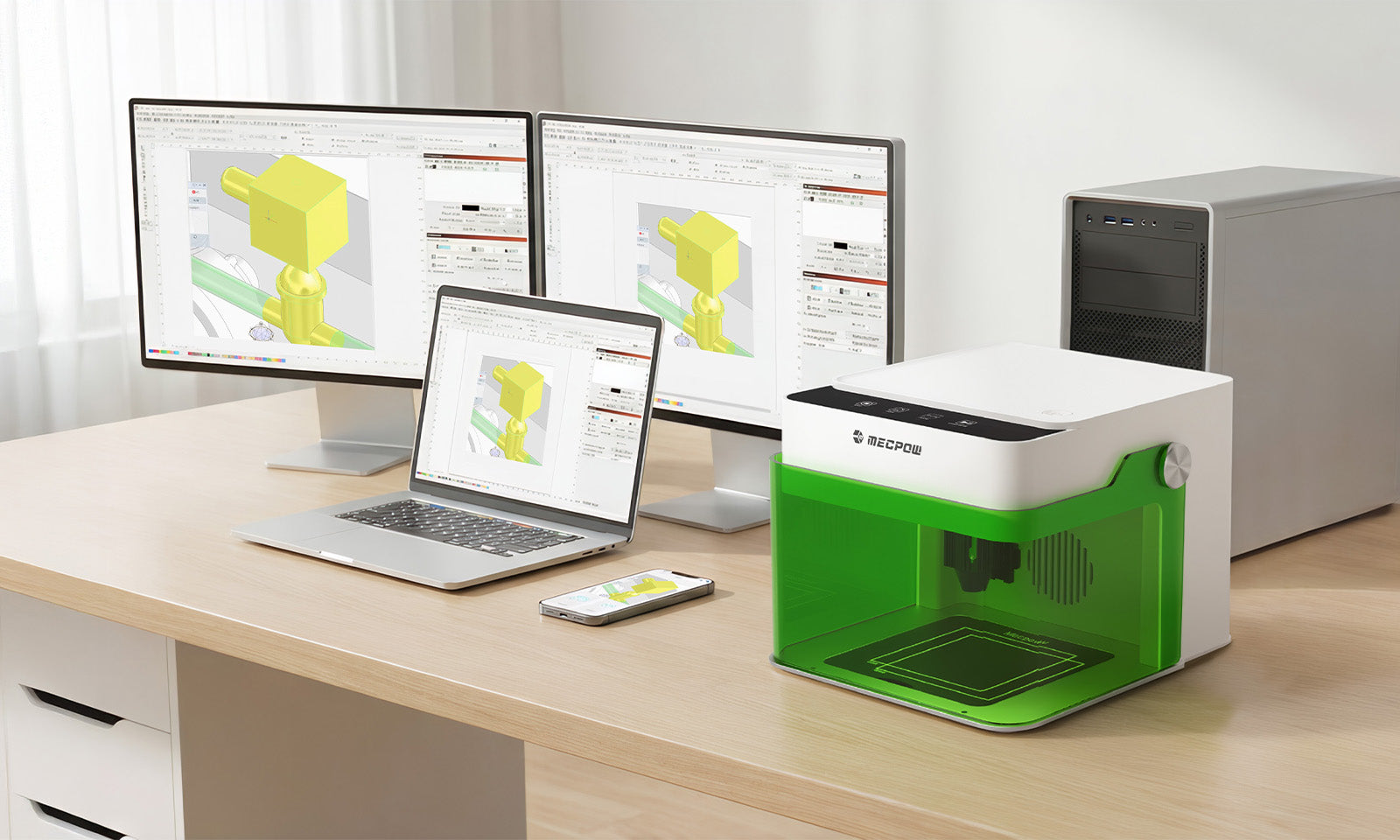
There are plenty of beginner-friendly options in laser engraving, like the Mecpow M1. It is a safe, easy-to-use system with pre-installed software so you can turn DIY projects into meaningful, fast results. You get plenty of design contrast to make even a simple sheet of wood feel stunning and fresh.
Other examples include:
- Engraved family signs
- Personalized cutting boards
- Custom logo coasters
- Photo plaques
- Acrylic décor
- Engraved wooden bookmarks
- Custom toy pieces

Making Complex Structural Parts
If you want to create something entirely from scratch, then 3D printers are a good choice. You can add functionality to other items around the home and workspace by using 3D printer filament. All the design software supports precise dimensions, so the final shape fits into place without much extra work.
Say you want to build a retro candy dispenser that fits on your desk. Instead of hiring a business to prototype your design, you can just print all the parts and fit them together by snapping them into place or using adhesives, and you’re good to go.
Other examples include:
- Brackets & mounts
- Tool holders
- Replacement parts
- Cable organizers
- Clips & clamps
- Mechanical spacers
Efficient Multifunctional Combinations
Once you get a good handle on one of the device’s operations, why not expand to using both? You can create a 3D printed base item that fits a unique shape design, then put it into your laser engraver for surface beautification and personalization.
The combination of both, using a 3D printer and a laser engraving machine, results in professional-grade products that take your hobby and turn it into a brand-new side hustle or small business that customers love to explore.
Choosing the Right Tools Makes Creating Easier
Laser engraving and 3D printers are not competitors. They are excellent ways to explore all your creative pursuits. Technology has advanced rapidly, making it easier than ever for hobbyists and beginners to customize a wooden plaque with an engraver or create an RPG game piece with a 3D printer.
A good starting point would be a Mecpow laser engraver. You get a safe, approachable device that delivers repeatable results and has a learning curve that isn’t too steep. From there, expand into the 3D printer makerspace, and you’ll find a whole new world perfect for designing ideas and bringing them to life.

Leave a comment
This site is protected by hCaptcha and the hCaptcha Privacy Policy and Terms of Service apply.